Dry Eye Disease (DED) is a common condition whereby your tears fail to provide adequate lubrication for the surface of your eyes.1
This occurs due to your tears either evaporating too quickly or that your tear volume is reduced. 1
When your tears fail to properly hydrate your eye, it leads to dryness and inflammation of your eye’s surface, resulting in an uncomfortable sensation, redness and even visual disturbances. 1,2
tears - the eyes' natural lubricant
The tear film has 3 layers.3,4
1. Protective barrier that slows down evaporation of tears
2. Provides moisture, nourishment and protects the surface of the eye
3. Helps spread the tears evenly over the surface of the eye and protects corneal cells.
The Main Symptoms 5-7
If you are experiencing one or more of the below symptoms, you may have Dry Eyes.
These symptoms often worsen as the day progresses.5,7
Scratchy
Stinging
Gritty
Dry
Worsens throughout the day
You may also experience one or more other symptoms 5-7
Irritation
Burning
Tearing
Light Sensitvity
Redness
Blurred Vision
Sharp Pain
what causes dry eye disease (DED)?
There are a number of factors that can lead to dry eyes. 1,5,7
Your daily environment
Dry air / Low humidity
Wind / smoke
Air conditioning
Extreme temperatures (hot/cold)
Your daily activities
Reading
Working on a computer for long hours
Using a digital device for long periods
Your health condition
Your age
Diabetes
Menopause
Using certain medication; e.g. for blood pressure, depression, acne, allergies
Eye conditions or damage
types and severity
There are two types of dry eyes.2,5
Although these types may be caused by different factors, they may have many of the same symptoms, so most people are considered to have a mixture of these types of the condition.2,5
You may be classified to have mild, moderate or severe disease, based on the symptoms you have and how much it impacts your daily life.8
Symptoms experienced now and then
Symptoms have some impact on your daily life
Symptoms experienced recurrently
Symptoms have a noticeable impact on daily life
Symptoms experienced most of the time
Symptoms have a significant impact on most daily activities
Your doctor will also look at how your tears perform in keeping your eyes hydrated, and the health of your eye’s surface.8
PROTECTING YOUR EYES BEFORE AND AFTER SURGERY
Some of the most common eye surgeries are cataract surgeries and LASIK surgery (LASIK is lasersurgery used to correct your vision).1,22
Minor, short term damage and changes to the eye itself may cause your eyes to produce less tears, but this usually resolve largely by itself as the eye heals.23,24
Most patients experience dry eye symptoms shortly after eye surgery, and this may continue for a few months, even up to a year after surgery. These symptoms can be treated by using hydrating eye drops before and after surgery.23,24
It is as important to use a hydrating eye drop before surgery as it is to use it after surgery to make sure you obtain the best clinical outcome from your surgery and help the eyes heal as quickly as possible.1,23
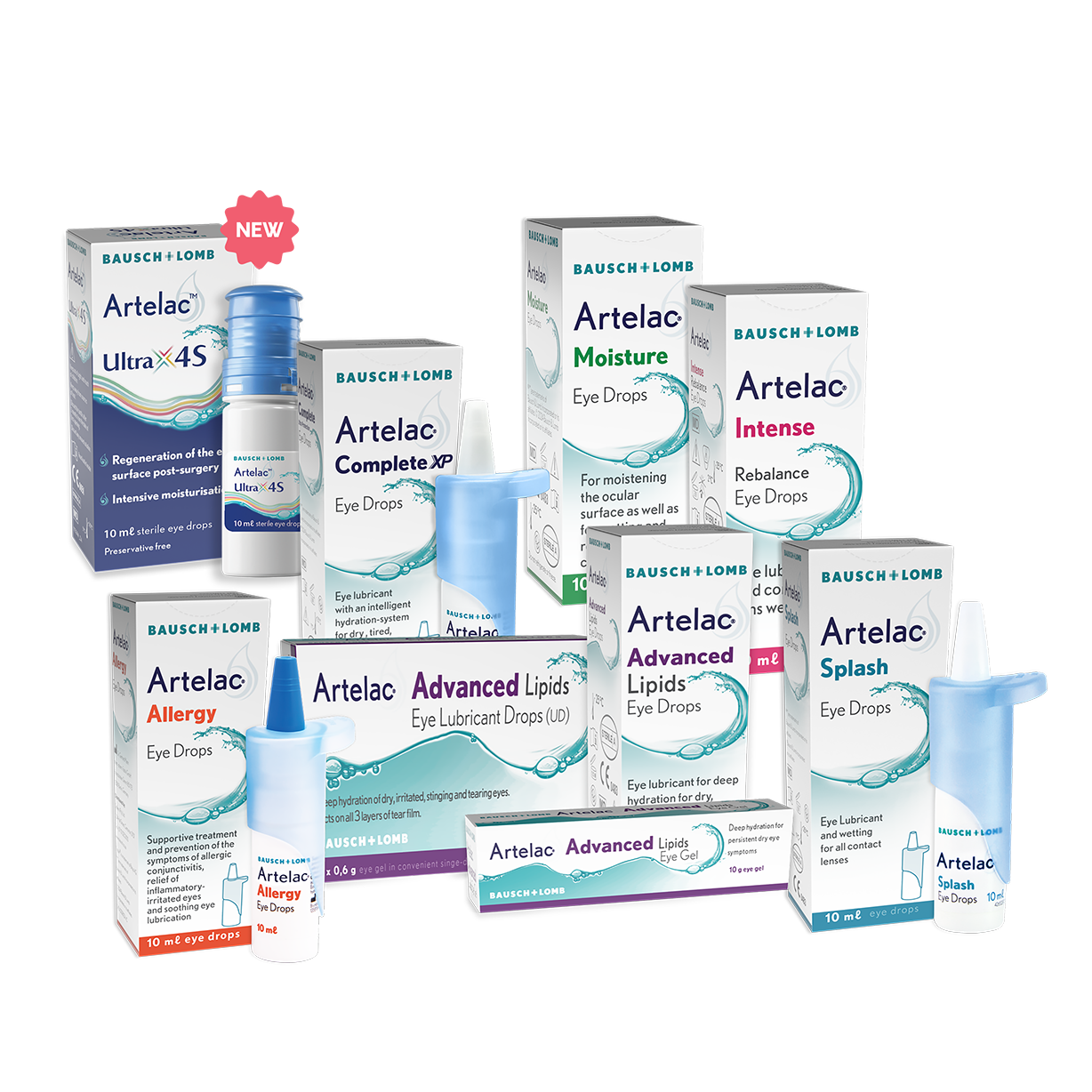
Find relief with artelac®
Dry, scratchy or irritated eyes? Whether your symptoms are mild or more persistent, there’s an Artelac® solution for you.
Explore our full range of eye drops and discover the formula that’s right for you.